Redis 只有在处理「客户端请求」时,是单线程的;整个 Redis server 不是单线程的,还有后台线程在辅助处理任务。
Redis 选择单线程处理请求,是因为 Redis 操作的是「内存」,加上设计了「高效」的数据结构,所以操作速度极快,利用 IO 多路复用机制,单线程依旧可以有非常高的性能。
Redis 不让主线程执行一些耗时操作,比如同步写、删除等,而是交给后台线程异步完成,从而避免了对主线程的阻塞。
在 2020 年 5 月推出的 Redis 6.0 版本中,还会使用多线程来处理 IO 任务,能够充分利用服务器的多核特性,使用多核运行多线程,让多线程帮助加速数据读取、命令解析和数据写回的速度,提升 Redis 的整体性能。
在 main 函数中,会调用 InitServerLast 函数,Redis 6.0 源码:
void InitServerLast() { bioInit(); // 初始化 IO 线程 initThreadedIO(); set_jemalloc_bg_thread(server.jemalloc_bg_thread); server.initial_memory_usage = zmalloc_used_memory();}在调用了 bioInit 函数后,又调用了 initThreadedIO 函数初始化多 IO 线程。initThreadedIO 函数在 networking.c 文件中。
void initThreadedIO(void) { // IO 线程激活标志:设置为「未激活」 server.io_threads_active = 0; // 只有 1 个 io 线程,直接返回,直接在主线程处理 IO if (server.io_threads_num == 1) return; if (server.io_threads_num > IO_THREADS_MAX_NUM) { serverLog(LL_WARNING,"Fatal: too many I/O threads configured. " "The maximum number is %d.", IO_THREADS_MAX_NUM); exit(1); } /* Spawn and initialize the I/O threads. */ for (int i = 0; i < server.io_threads_num; i++) { io_threads_list[i] = listCreate(); // Thread 0 是主线程 if (i == 0) continue; /* Things we do only for the additional threads. */ pthread_t tid; // 初始化 io_threads_mutex pthread_mutex_init(&io_threads_mutex[i],NULL); setIOPendingCount(i, 0); pthread_mutex_lock(&io_threads_mutex[i]); /* Thread will be stopped. */ // pthread_create 创建 IO 线程,线程运行函数是 IOThreadMain if (pthread_create(&tid,NULL,IOThreadMain,(void*)(long)i) != 0) { serverLog(LL_WARNING,"Fatal: Can't initialize IO thread."); exit(1); } // 初始化 io_threads 数组,设置值为线程标识 io_threads[i] = tid; }}代码中首先判断 io_threads_num:
initThreadedIO 函数就会给以下四个数组进行初始化操作:
io_threads_list 数组:保存了每个 IO 线程要处理的客户端,将数组每个元素初始化为一个 List 类型的列表io_threads_pending 数组:保存等待每个 IO 线程处理的客户端个数io_threads_mutex 数组:保存线程互斥锁io_threads 数组:保存每个 IO 线程的描述符这四个数组的定义都在 networking.c 文件中:
pthread_t io_threads[IO_THREADS_MAX_NUM]; //记录线程描述符的数组pthread_mutex_t io_threads_mutex[IO_THREADS_MAX_NUM]; //记录线程互斥锁的数组_Atomic unsigned long io_threads_pending[IO_THREADS_MAX_NUM]; //记录线程待处理的客户端个数list *io_threads_list[IO_THREADS_MAX_NUM]; //记录线程对应处理的客户端initThreadedIO 函数在 for 循环中,调用 pthread_create 函数创建线程。pthread_create 详细语法见:pthread_create(3) — Linux manual page。
创建的线程要运行的函数是 IOThreadMain,*arg 参数就是当前创建线程的编号(从 1 开始,0 是主 IO 线程)。
/* Spawn and initialize the I/O threads. */for (int i = 0; i < server.io_threads_num; i++) { io_threads_list[i] = listCreate(); // Thread 0 是主线程 if (i == 0) continue; /* Things we do only for the additional threads. */ pthread_t tid; // 初始化 io_threads_mutex pthread_mutex_init(&io_threads_mutex[i],NULL); setIOPendingCount(i, 0); pthread_mutex_lock(&io_threads_mutex[i]); // pthread_create 创建 IO 线程,线程运行函数是 IOThreadMain if (pthread_create(&tid,NULL,IOThreadMain,(void*)(long)i) != 0) { serverLog(LL_WARNING,"Fatal: Can't initialize IO thread."); exit(1); } // 初始化 io_threads 数组,设置值为线程标识 io_threads[i] = tid;}主要逻辑是一个 while(1) 的循环,会把 io_threads_list 在这个线程对应的元素取出来,判断并处理。
void *IOThreadMain(void *myid) { …… while(1) { /* Wait for start */ for (int j = 0; j < 1000000; j++) { if (getIOPendingCount(id) != 0) break; } …… // 获取 IO 线程要处理的客户端列表 listRewind(io_threads_list[id],&li); while((ln = listNext(&li))) { // 从客户端列表中获取一个客户端 client *c = listNodeValue(ln); // 线程是「写操作」,调用 writeToClient 将数据写回客户端 if (io_threads_op == IO_THREADS_OP_WRITE) { writeToClient(c,0); // 如果是『读操作』,调用 readQueryFromClient 从客户端读数据 } else if (io_threads_op == IO_THREADS_OP_READ) { readQueryFromClient(c->conn); } …… } // 处理完所有客户端,清空该线程的客户端列表 listEmpty(io_threads_list[id]); // 将该线程的待处理任务数量设为 0 setIOPendingCount(id, 0); }}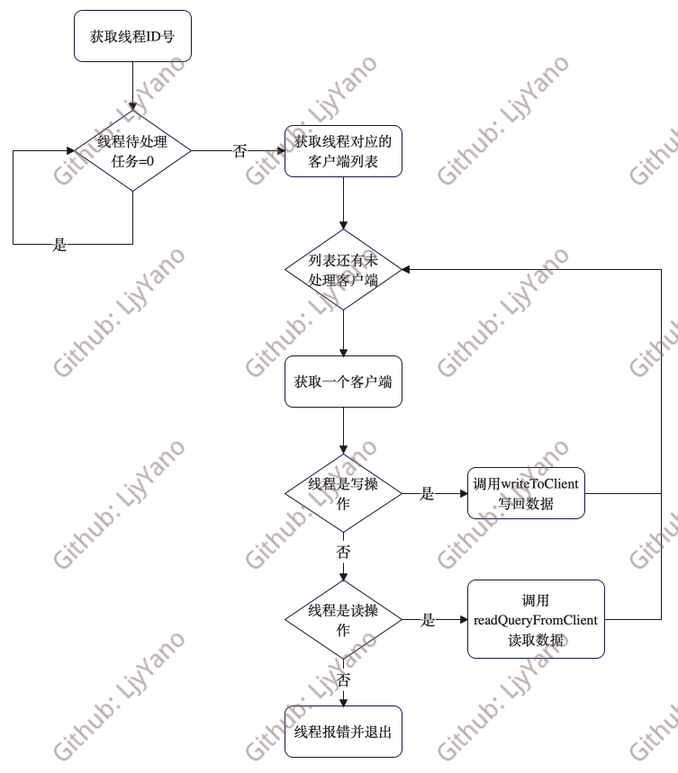
注:上面代码中 io_threads_op 变量是在 handleClientsWithPendingWritesUsingThreads 函数和 handleClientsWithPendingReadsUsingThreads 函数中设置的。
问题:IO 线程要处理的客户端是如何添加到 io_threads_list 数组中的呢?
是在 redisServer 全局变量里,有两个 List 类型的成员变量:
clients_pending_write:待写回数据的客户端clients_pending_read:待读取数据的客户端struct redisServer { ... // 待写回数据的客户端 list *clients_pending_write; // 待读取数据的客户端 list *clients_pending_read; ...}Redis server 在接收到客户端请求、返回给客户端数据的过程中,会根据一定条件,推迟客户端的读写操作,并分别把待读写的客户端保存到这两个列表中。之后 Redis server 每次进入事件循环前,都会把列表中的客户端添加到 io_threads_list 数组中,交给 IO 线程处理。
处理可读事件的回调函数是 readQueryFromClient。
void readQueryFromClient(connection *conn) { // 从 connection 结构中获取客户端 client *c = connGetPrivateData(conn); …… // 是否推迟从客户端读取数据(使用多线程 IO 时) if (postponeClientRead(c)) return; ……}主要看下 postponeClientRead 函数。
int postponeClientRead(client *c) { if (server.io_threads_active && server.io_threads_do_reads && !ProcessingEventsWhileBlocked && !(c->flags & (CLIENT_MASTER|CLIENT_SLAVE|CLIENT_PENDING_READ|CLIENT_BLOCKED))) { // 客户端 flag 添加 CLIENT_PENDING_READ 标记,推迟客户端的读操作 c->flags |= CLIENT_PENDING_READ; // 将客户端添加到 server 的 clients_pending_read 列表中 listAddNodeHead(server.clients_pending_read,c); return 1; } else { return 0; }}if 的判断条件:是否可以推迟当前客户端的读操作;if 块里的执行逻辑:将客户端添加到 clients_pending_read 列表中。下面主要看下判断条件:
server.io_threads_active = 1:多 IO 线程已激活。server.io_threads_do_reads = 1:多 IO 线程可用于处理延迟执行的客户端读操作,是在 Redis 配置文件 redis.conf 中,通过配置项 。io-threads-do-reads 设置的,默认值为 no。ProcessingEventsWhileBlocked = 0:ProcessingEventsWhileBlocked 函数没有在执行,当 Redis 在读取 RDB 文件或 AOF 文件时,会调用这个函数,用来处理事件驱动框架捕获到的事件,避免因读取 RDB 或 AOF 文件造成 Redis 阻塞。CLIENT_MASTER、CLIENT_SLAVE 和 CLIENT_PENDING_READRedis 在执行了客户端命令,要给客户端返回结果时,会调用 addReply 函数将待返回的结果写入输出缓冲区。addReply 函数开始就会调用 prepareClientToWrite 函数。
/* ----------------------------------------------------------------------------- * Higher level functions to queue data on the client output buffer. * The following functions are the ones that commands implementations will call. * -------------------------------------------------------------------------- *//* Add the object 'obj' string representation to the client output buffer. */void addReply(client *c, robj *obj) { if (prepareClientToWrite(c) != C_OK) return; ……}prepareClientToWrite 函数的注释如下:
/* This function is called every time we are going to transmit new data * to the client. The behavior is the following: * * If the client should receive new data (normal clients will) the function * returns C_OK, and make sure to install the write handler in our event * loop so that when the socket is writable new data gets written. * * If the client should not receive new data, because it is a fake client * (used to load AOF in memory), a master or because the setup of the write * handler failed, the function returns C_ERR. * * The function may return C_OK without actually installing the write * event handler in the following cases: * * 1) The event handler should already be installed since the output buffer * already contains something. * 2) The client is a slave but not yet online, so we want to just accumulate * writes in the buffer but not actually sending them yet. * * Typically gets called every time a reply is built, before adding more * data to the clients output buffers. If the function returns C_ERR no * data should be appended to the output buffers. */int prepareClientToWrite(client *c) { …… // 当前客户端没有待写回数据 && flag 不包含 CLIENT_PENDING_READ if (!clientHasPendingReplies(c) && !(c->flags & CLIENT_PENDING_READ)) clientInstallWriteHandler(c); return C_OK;}clientInstallWriteHandler 如下,if 判断条件就不赘述了。
void clientInstallWriteHandler(client *c) { if (!(c->flags & CLIENT_PENDING_WRITE) && (c->replstate == REPL_STATE_NONE || (c->replstate == SLAVE_STATE_ONLINE && !c->repl_put_online_on_ack))) { // 将客户端的标识设置为 CLIENT_PENDING_WRITE(待写回) c->flags |= CLIENT_PENDING_WRITE; // 将 client 加入 server 的 clients_pending_write 列表 listAddNodeHead(server.clients_pending_write,c); }}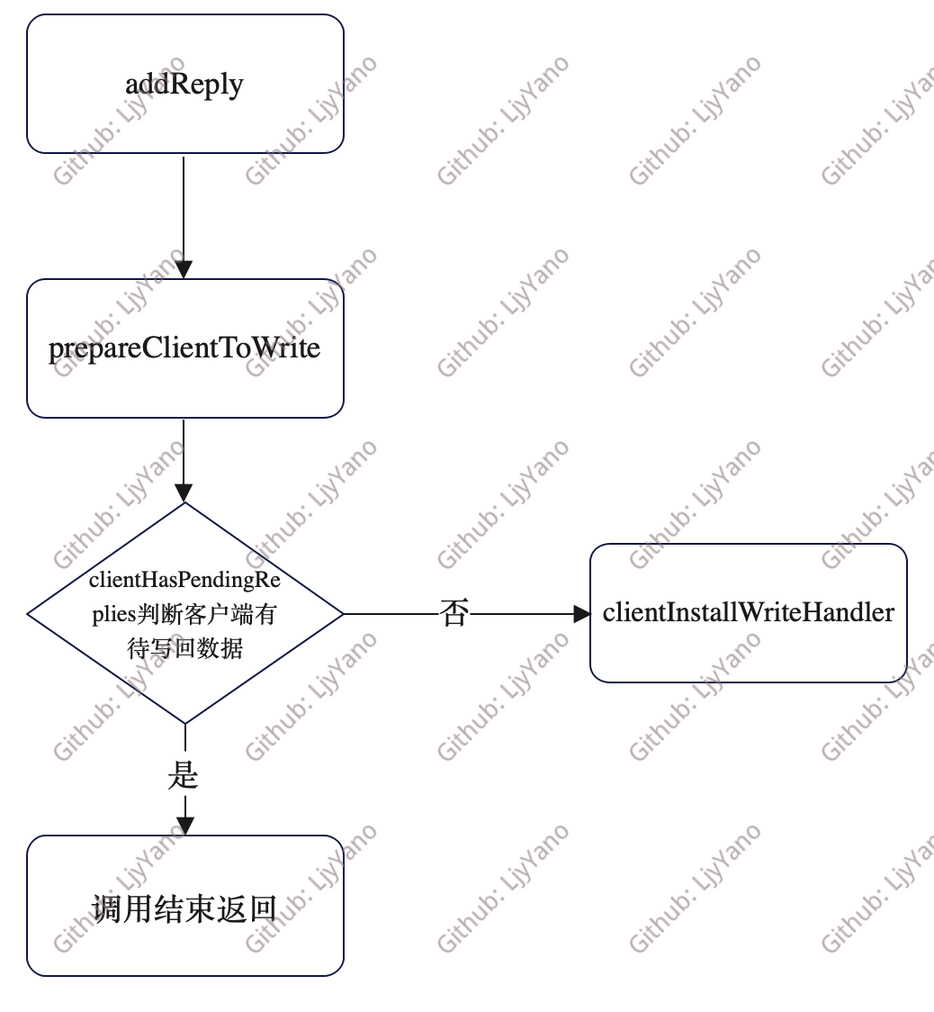
上面介绍如如何推迟客户端的读操作、写操作,那 Redis 是如何将推迟读写操作的客户端,分配给多 IO 线程执行的呢?是通过:
handleClientsWithPendingReadsUsingThreads 函数:将 clients_pending_read 列表中的客户端分配给 IO 线程handleClientsWithPendingWritesUsingThreads 函数:将 clients_pending_write 列表中的客户端分配给 IO 线程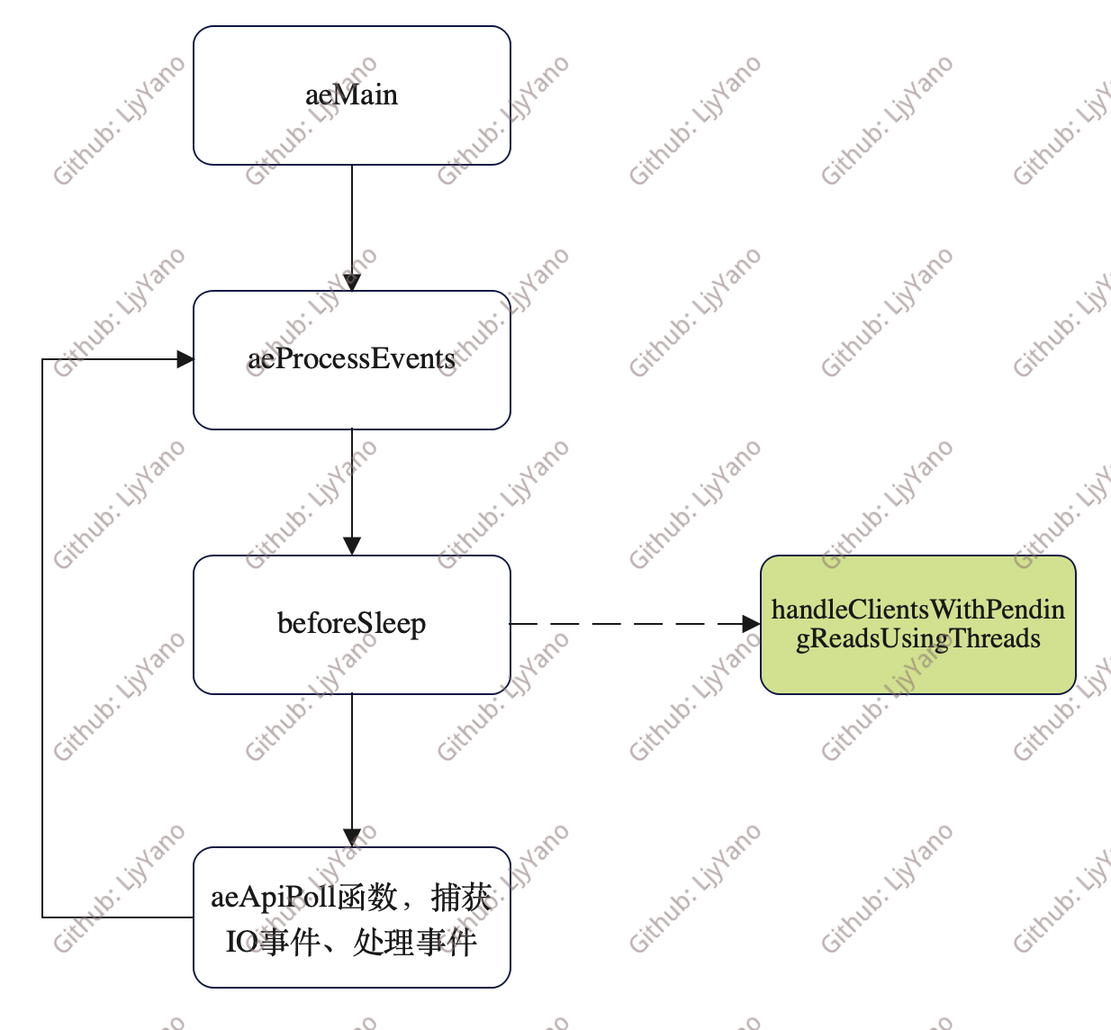
beforeSleep 函数中调用了 handleClientsWithPendingReadsUsingThreads 函数:
/* We should handle pending reads clients ASAP after event loop. */handleClientsWithPendingReadsUsingThreads();handleClientsWithPendingReadsUsingThreads 函数如下,逻辑都在注释中:
/* When threaded I/O is also enabled for the reading + parsing side, the * readable handler will just put normal clients into a queue of clients to * process (instead of serving them synchronously). This function runs * the queue using the I/O threads, and process them in order to accumulate * the reads in the buffers, and also parse the first command available * rendering it in the client structures. */int handleClientsWithPendingReadsUsingThreads(void) { // 判断 io_threads_active 是否被激活,io_threads_do_reads 是否可以用 IO 线程处理待读客户端 if (!server.io_threads_active || !server.io_threads_do_reads) return 0; // 判断 clients_pending_read 长度 int processed = listLength(server.clients_pending_read); if (processed == 0) return 0; /* Distribute the clients across N different lists. */ listIter li; listNode *ln; // 获取 clients_pending_read 的客户端列表 listRewind(server.clients_pending_read,&li); // 轮询方式,将客户端分配给 IO 线程 int item_id = 0; while((ln = listNext(&li))) { client *c = listNodeValue(ln); int target_id = item_id % server.io_threads_num; listAddNodeTail(io_threads_list[target_id],c); item_id++; } // 将 IO 线程的操作标识设置为「读操作」 io_threads_op = IO_THREADS_OP_READ; for (int j = 1; j < server.io_threads_num; j++) { // 每个线程等待处理的客户端数量 → io_threads_pending 数组 int count = listLength(io_threads_list[j]); setIOPendingCount(j, count); } // 处理 0 号线程(主线程)的待读客户端 listRewind(io_threads_list[0],&li); while((ln = listNext(&li))) { client *c = listNodeValue(ln); readQueryFromClient(c->conn); } // 清空 0 号列表 listEmpty(io_threads_list[0]); // 循环,等待其他所有 IO 线程的待读客户端都处理完 while(1) { unsigned long pending = 0; for (int j = 1; j < server.io_threads_num; j++) pending += getIOPendingCount(j); if (pending == 0) break; } /* Run the list of clients again to process the new buffers. */ // 取出 clients_pending_read 列表 while(listLength(server.clients_pending_read)) { ln = listFirst(server.clients_pending_read); client *c = listNodeValue(ln); // 判断客户端标识符是否有 CLIENT_PENDING_READ,有则表示被 IO 线程解析过 c->flags &= ~CLIENT_PENDING_READ; // 将客户端从 clients_pending_read 列表中删掉 listDelNode(server.clients_pending_read,ln); serverAssert(!(c->flags & CLIENT_BLOCKED)); if (processPendingCommandsAndResetClient(c) == C_ERR) { /* If the client is no longer valid, we avoid * processing the client later. So we just go * to the next. */ continue; } // 解析并执行客户端的所有命令 processInputBuffer(c); /* We may have pending replies if a thread readQueryFromClient() produced * replies and did not install a write handler (it can't). */ if (!(c->flags & CLIENT_PENDING_WRITE) && clientHasPendingReplies(c)) clientInstallWriteHandler(c); } /* Update processed count on server */ server.stat_io_reads_processed += processed; return processed;}待写客户端的分配处理是由 handleClientsWithPendingWritesUsingThreads 函数完成的,该函数也是在 beforeSleep 函数中调用的。逻辑和 handleClientsWithPendingReadsUsingThreads 函数很像。
int handleClientsWithPendingWritesUsingThreads(void) { // 判断 clients_pending_write 列表的数量 int processed = listLength(server.clients_pending_write); if (processed == 0) return 0; // 只有主 IO 线程 || 不使用 IO 线程 if (server.io_threads_num == 1 || stopThreadedIOIfNeeded()) { return handleClientsWithPendingWrites(); } /* Start threads if needed. */ if (!server.io_threads_active) startThreadedIO(); /* Distribute the clients across N different lists. */ listIter li; listNode *ln; listRewind(server.clients_pending_write,&li); int item_id = 0; // 把待写客户端,按照轮询方式分配给 IO 线程 while((ln = listNext(&li))) { client *c = listNodeValue(ln); c->flags &= ~CLIENT_PENDING_WRITE; if (c->flags & CLIENT_CLOSE_ASAP) { listDelNode(server.clients_pending_write, ln); continue; } int target_id = item_id % server.io_threads_num; listAddNodeTail(io_threads_list[target_id],c); item_id++; } // 将 IO 线程的操作标识设置为「写操作」 io_threads_op = IO_THREADS_OP_WRITE; for (int j = 1; j < server.io_threads_num; j++) { // 每个线程等待处理的客户端数量 → io_threads_pending 数组 int count = listLength(io_threads_list[j]); setIOPendingCount(j, count); } /* Also use the main thread to process a slice of clients. */ listRewind(io_threads_list[0],&li); while((ln = listNext(&li))) { client *c = listNodeValue(ln); writeToClient(c,0); } listEmpty(io_threads_list[0]); // 循环,等待其他所有 IO 线程的待写客户端都处理完 while(1) { unsigned long pending = 0; for (int j = 1; j < server.io_threads_num; j++) pending += getIOPendingCount(j); if (pending == 0) break; } /* Run the list of clients again to install the write handler where * needed. */ listRewind(server.clients_pending_write,&li); while((ln = listNext(&li))) { client *c = listNodeValue(ln); // 再次检查是否有待写客户端 if (clientHasPendingReplies(c) && connSetWriteHandler(c->conn, sendReplyToClient) == AE_ERR) { freeClientAsync(c); } } listEmpty(server.clients_pending_write); /* Update processed count on server */ server.stat_io_writes_processed += processed; return processed;}需要注意的是,stopThreadedIOIfNeeded 函数中会判断待写入的客户端数量如果 < IO 线程数 * 2,则也会直接返回,直接使用主 IO 线程处理待写客户端。这是因为待写客户端不多时,使用多线程效率反而会下降。
int stopThreadedIOIfNeeded(void) { int pending = listLength(server.clients_pending_write); /* Return ASAP if IO threads are disabled (single threaded mode). */ if (server.io_threads_num == 1) return 1; if (pending < (server.io_threads_num*2)) { if (server.io_threads_active) stopThreadedIO(); return 1; } else { return 0; }}Redis 6.0 实现的多 IO 线程机制,主要是使用多个 IO 线程,并发处理客户端读取数据、解析命令、写回数据,充分利用服务器的多核特性,提高 IO 效率。
Redis server 会根据 readQueryFromClient 函数调用 postponeClientRead 函数决定是否要推迟客户端操作;会根据 addReply 函数中的 prepareClientToWrite 函数,决定是否推迟客户端的写操作。待读客户端加入到 clients_pending_read 列表,待写客户端加入 clients_pending_write 列表。
IO 线程创建之后,会一直检测 io_threads_list 列表,如果有待读写的客户端,IO 线程就会调用 readQueryFromClient 或 writeToClient 函数进行处理。
但是多 IO 线程并不会执行命令,执行命令仍然在主 IO 线程。
最简洁的 Redis 源码剖析系列文章
Java 编程思想-最全思维导图-GitHub 下载链接,需要的小伙伴可以自取~
原创不易,希望大家转载时请先联系我,并标注原文链接。