前几天在生产环境上redis创建连接方面的故障,分析过程中对ServiceStack.Redis的连接创建和连接池机制有了进一步了解。问题分析结束后,通过此文系统的将学习到的知识点整理出来。
public IRedisClient GetClient() { RedisClient redisClient = null; DateTime now = DateTime.Now; for (; ; ) { if (!this.deactiveClientQueue.TryPop(out redisClient)) { if (this.redisClientSize >= this.maxRedisClient) { Thread.Sleep(3); if (this.PoolTimeout != null && (DateTime.Now - now).TotalMilliseconds >= (double)this.PoolTimeout.Value) { break; } } else { redisClient = this.CreateRedisClient(); if (redisClient != null) { goto Block_5; } } } else { if (!redisClient.HadExceptions) { goto Block_6; } List<RedisClient> obj = this.writeClients; lock (obj) { this.writeClients.Remove(redisClient); this.redisClientSize--; } RedisState.DisposeDeactivatedClient(redisClient); } } bool flag2 = true; if (flag2) { throw new TimeoutException("Redis Timeout expired. The timeout period elapsed prior to obtaining a connection from the pool. This may have occurred because all pooled connections were in use."); } return redisClient; Block_5: this.writeClients.Add(redisClient); return redisClient; Block_6: redisClient.Active = true; this.InitClient(redisClient); return redisClient; }此方法的主体是死循环,主要实现了这几项功能:
上述流程就是从连接池获取Client的主要流程,其中this.deactiveClientQueue相当于“Client池”。需要注意this.PoolTimeout的含义是当连接池耗尽时调用方等待的时间。
上述过程通过流程图表示为:

源码如下:
private RedisClient CreateRedisClient() { if (this.redisClientSize >= this.maxRedisClient) { return null; } object obj = this.lckObj; RedisClient result; lock (obj) { if (this.redisClientSize >= this.maxRedisClient) { result = null; } else { Random random = new Random((int)DateTime.Now.Ticks); RedisClient newClient = this.InitNewClient(this.RedisResolver.CreateMasterClient(random.Next(100))); newClient.OnDispose += delegate() { if (!newClient.HadExceptions) { List<RedisClient> obj2 = this.writeClients; lock (obj2) { if (!newClient.HadExceptions) { try { this.deactiveClientQueue.Push(newClient); return; } catch { this.writeClients.Remove(newClient); this.redisClientSize--; RedisState.DisposeDeactivatedClient(newClient); } } } } this.writeClients.Remove(newClient); this.redisClientSize--; RedisState.DisposeDeactivatedClient(newClient); }; this.redisClientSize++; result = newClient; } } return result; }基于并发的考虑,创建新Client的流程需要增加并发锁限制,即lock (obj)处。此时如果多个线程都进入CreateRedisClient()方法,则只有一个线程实际执行,其它线程阻塞等待锁释放。这个现象可以通过windbg的syncblk、clrstack命令分析查看。其余的部分就是继续调用this.InitNewClient(this.RedisResolver.CreateMasterClient(random.Next(100)))创建对象,并对newClient的OnDispose事件增加了处理逻辑。需要说明的是此处OnDispose事件并不是传统意义的析构,而是调用方用完此RedisClient对象后,用于将其回收到连接池的操作,即:newClient对象没有异常的前提下, 将其Push到this.deactiveClientQueue栈里,连接池就是此处回收扩充的。
此处是对新创建的RedisClient对象初始化,包括Id、Active等,并继续调用this.InitClient()进一步初始化。
this.redisResolver是IRedisResolver接口类型,源码中有三种实现,如下截图。此处以生产常见的哨兵模式为例进行分析。
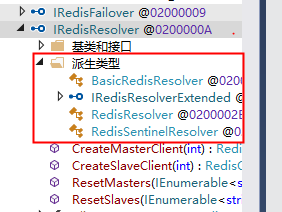
RedisSentinelResolver类对应的就是哨兵模式,其相关操作源码如下:
public RedisClient CreateMasterClient(int desiredIndex) { return this.CreateRedisClient(this.GetReadWriteHost(desiredIndex), true); } public RedisEndpoint GetReadWriteHost(int desiredIndex) { return this.sentinel.GetMaster() ?? this.masters[desiredIndex % this.masters.Length]; } public virtual RedisClient CreateRedisClient(RedisEndpoint config, bool master) { RedisClient result = this.ClientFactory(config); if (master) { RedisServerRole redisServerRole = RedisServerRole.Unknown; try { using (RedisClient redisClient = this.ClientFactory(config)) { redisClient.ConnectTimeout = 5000; redisClient.ReceiveTimeout = 5000; redisServerRole = redisClient.GetServerRole(); if (redisServerRole == RedisServerRole.Master) { this.lastValidMasterFromSentinelAt = DateTime.UtcNow; return result; } } } catch (Exception exception) { Interlocked.Increment(ref RedisState.TotalInvalidMasters); using (RedisClient redisClient2 = this.ClientFactory(config)) { redisClient2.ConnectTimeout = 5000; redisClient2.ReceiveTimeout = 5000; if (redisClient2.GetHostString() == this.lastInvalidMasterHost) { object obj = this.oLock; lock (obj) { if (DateTime.UtcNow - this.lastValidMasterFromSentinelAt > this.sentinel.WaitBeforeForcingMasterFailover) { this.lastInvalidMasterHost = null; this.lastValidMasterFromSentinelAt = DateTime.UtcNow; RedisSentinelResolver.log.Error("Valid master was not found at '{0}' within '{1}'. Sending SENTINEL failover...".Fmt(redisClient2.GetHostString(), this.sentinel.WaitBeforeForcingMasterFailover), exception); Interlocked.Increment(ref RedisState.TotalForcedMasterFailovers); this.sentinel.ForceMasterFailover(); Thread.Sleep(this.sentinel.WaitBetweenFailedHosts); redisServerRole = redisClient2.GetServerRole(); } goto IL_16E; } } this.lastInvalidMasterHost = redisClient2.GetHostString(); IL_16E:; } } if (redisServerRole != RedisServerRole.Master && RedisConfig.VerifyMasterConnections) { try { Stopwatch stopwatch = Stopwatch.StartNew(); for (;;) { try { RedisEndpoint master2 = this.sentinel.GetMaster(); using (RedisClient redisClient3 = this.ClientFactory(master2)) { redisClient3.ReceiveTimeout = 5000; redisClient3.ConnectTimeout = this.sentinel.SentinelWorkerConnectTimeoutMs; if (redisClient3.GetServerRole() == RedisServerRole.Master) { this.lastValidMasterFromSentinelAt = DateTime.UtcNow; return this.ClientFactory(master2); } Interlocked.Increment(ref RedisState.TotalInvalidMasters); } } catch { } if (stopwatch.Elapsed > this.sentinel.MaxWaitBetweenFailedHosts) { break; } Thread.Sleep(this.sentinel.WaitBetweenFailedHosts); } throw new TimeoutException("Max Wait Between Sentinel Lookups Elapsed: {0}".Fmt(this.sentinel.MaxWaitBetweenFailedHosts.ToString())); } catch (Exception exception2) { RedisSentinelResolver.log.Error("Redis Master Host '{0}' is {1}. Resetting allHosts...".Fmt(config.GetHostString(), redisServerRole), exception2); List<RedisEndpoint> list = new List<RedisEndpoint>(); List<RedisEndpoint> list2 = new List<RedisEndpoint>(); RedisClient redisClient4 = null; foreach (RedisEndpoint redisEndpoint in this.allHosts) { try { using (RedisClient redisClient5 = this.ClientFactory(redisEndpoint)) { redisClient5.ReceiveTimeout = 5000; redisClient5.ConnectTimeout = RedisConfig.HostLookupTimeoutMs; RedisServerRole serverRole = redisClient5.GetServerRole(); if (serverRole != RedisServerRole.Master) { if (serverRole == RedisServerRole.Slave) { list2.Add(redisEndpoint); } } else { list.Add(redisEndpoint); if (redisClient4 == null) { redisClient4 = this.ClientFactory(redisEndpoint); } } } } catch { } } if (redisClient4 == null) { Interlocked.Increment(ref RedisState.TotalNoMastersFound); string message = "No master found in: " + string.Join(", ", this.allHosts.Map((RedisEndpoint x) => x.GetHostString())); RedisSentinelResolver.log.Error(message); throw new Exception(message); } this.ResetMasters(list); this.ResetSlaves(list2); return redisClient4; } return result; } return result; } return result; }其中GetReadWriteHost()方法的逻辑是:优先使用this.sentinel.GetMaster()得到的主节点信息。如果GetMaster()失败,则从现有的主节点集合masters中随机选择一个进行连接。
然后进入CreateRedisClient()方法内:
至此,通过上述的流程,最终能够得到master节点的RedisClient对象,并返回给调用方。
上述过程中,还有几处方法的实现比较重要和复杂,下面对其一一解释说明:
调用处很简单,但是此方法的实现操作挺多,RedisSentinel类 源码如下:
public RedisEndpoint GetMaster() { RedisSentinelWorker validSentinelWorker = this.GetValidSentinelWorker(); RedisSentinelWorker obj = validSentinelWorker; RedisEndpoint result; lock (obj) { string masterHost = validSentinelWorker.GetMasterHost(this.masterName); if (this.ScanForOtherSentinels && DateTime.UtcNow - this.lastSentinelsRefresh > this.RefreshSentinelHostsAfter) { this.RefreshActiveSentinels(); } result = ((masterHost != null) ? ((this.HostFilter != null) ? this.HostFilter(masterHost) : masterHost).ToRedisEndpoint(null) : null); } return result; } private RedisSentinelWorker GetValidSentinelWorker() { if (this.isDisposed) { throw new ObjectDisposedException(base.GetType().Name); } if (this.worker != null) { return this.worker; } RedisException innerException = null; while (this.worker == null && this.ShouldRetry()) { try { this.worker = this.GetNextSentinel(); this.GetSentinelInfo(); this.worker.BeginListeningForConfigurationChanges(); this.failures = 0; return this.worker; } catch (RedisException ex) { if (this.OnWorkerError != null) { this.OnWorkerError(ex); } innerException = ex; this.worker = null; this.failures++; Interlocked.Increment(ref RedisState.TotalFailedSentinelWorkers); } } this.failures = 0; Thread.Sleep(this.WaitBetweenFailedHosts); throw new RedisException("No Redis Sentinels were available", innerException); } private RedisSentinelWorker GetNextSentinel() { object obj = this.oLock; RedisSentinelWorker result; lock (obj) { if (this.worker != null) { this.worker.Dispose(); this.worker = null; } int num = this.sentinelIndex + 1; this.sentinelIndex = num; if (num >= this.SentinelEndpoints.Length) { this.sentinelIndex = 0; } result = new RedisSentinelWorker(this, this.SentinelEndpoints[this.sentinelIndex]) { OnSentinelError = new Action<Exception>(this.OnSentinelError) }; } return result; } private void OnSentinelError(Exception ex) { if (this.worker != null) { RedisSentinel.Log.Error("Error on existing SentinelWorker, reconnecting..."); if (this.OnWorkerError != null) { this.OnWorkerError(ex); } this.worker = this.GetNextSentinel(); this.worker.BeginListeningForConfigurationChanges(); } }先通过GetValidSentinelWorker()获得RedisSentinelWorker对象。此方法的实现包含了重试机制的控制,最终是通过this.GetNextSentinel()方法给this.worker字段,即RedisSentinelWorker对象实例。
而GetNextSentinel()方法内部包含了同步锁、调用this.worker.Dispose()、随机选择哨兵节点、实例化RedisSentinelWorker对象等操作。
后面是对validSentinelWorker进行加锁,然后继续执行string masterHost = validSentinelWorker.GetMasterHost(this.masterName);
对应的RedisSentinelWorker类的代码如下:
internal string GetMasterHost(string masterName) { string result; try { result = this.GetMasterHostInternal(masterName); } catch (Exception obj) { if (this.OnSentinelError != null) { this.OnSentinelError(obj); } result = null; } return result; } private string GetMasterHostInternal(string masterName) { List<string> list = this.sentinelClient.SentinelGetMasterAddrByName(masterName); if (list.Count <= 0) { return null; } return this.SanitizeMasterConfig(list); } public void Dispose() { new IDisposable[] { this.sentinelClient, this.sentinePubSub }.Dispose(RedisSentinelWorker.Log); }注意GetMasterHost()方法内:当发生异常时,会触发this对象的OnSentinelError事件,顾名思义这个事件用于哨兵异常的后续处理。通过源码搜索,只有GetNextSentinel()方法内对OnSentinelError事件增加了处理程序-->即RedisSentinel内的private void OnSentinelError(Exception ex)方法。而这个方法内部对打印日志和触发事件this.OnWorkerError后,又调用GetNextSentinel()重新给this.worker字段赋值。
需要注意:Dispose()方法实际是分别调用了this.sentinelClient和this.sentinePubSub的注销操作。
接着调用了RedisNativeClient类的SentinelGetMasterAddrByName()方法:
这个类里的几个方法的含义综合起来就是:将哨兵客户端的查询指令通过Socket发送到服务端,并将返回结果格式化为所需的RedisEndpoint类型。
在方法SendReceive()内还包含了Socket连接、重试、频率控制、超时控制等机制。
public List<string> SentinelGetMasterAddrByName(string masterName) { List<byte[]> list = new List<byte[]> { Commands.Sentinel, Commands.GetMasterAddrByName, masterName.ToUtf8Bytes() }; return this.SendExpectMultiData(list.ToArray()).ToStringList(); } protected byte[][] SendExpectMultiData(params byte[][] cmdWithBinaryArgs) { return this.SendReceive<byte[][]>(cmdWithBinaryArgs, new Func<byte[][]>(this.ReadMultiData), (this.Pipeline != null) ? new Action<Func<byte[][]>>(this.Pipeline.CompleteMultiBytesQueuedCommand) : null, false) ?? TypeConstants.EmptyByteArrayArray; } protected T SendReceive<T>(byte[][] cmdWithBinaryArgs, Func<T> fn, Action<Func<T>> completePipelineFn = null, bool sendWithoutRead = false) { int num = 0; Exception ex = null; DateTime utcNow = DateTime.UtcNow; T t; for (;;) { try { this.TryConnectIfNeeded(); if (this.socket == null) { throw new RedisRetryableException("Socket is not connected"); } if (num == 0) { this.WriteCommandToSendBuffer(cmdWithBinaryArgs); } if (this.Pipeline == null) { this.FlushSendBuffer(); } else if (!sendWithoutRead) { if (completePipelineFn == null) { throw new NotSupportedException("Pipeline is not supported."); } completePipelineFn(fn); t = default(T); t = t; break; } T t2 = default(T); if (fn != null) { t2 = fn(); } if (this.Pipeline == null) { this.ResetSendBuffer(); } if (num > 0) { Interlocked.Increment(ref RedisState.TotalRetrySuccess); } Interlocked.Increment(ref RedisState.TotalCommandsSent); t = t2; } catch (Exception ex2) { RedisRetryableException ex3 = ex2 as RedisRetryableException; if ((ex3 == null && ex2 is RedisException) || ex2 is LicenseException) { this.ResetSendBuffer(); throw; } Exception ex4 = ex3 ?? this.GetRetryableException(ex2); if (ex4 == null) { throw this.CreateConnectionError(ex ?? ex2); } if (ex == null) { ex = ex4; } if (!(DateTime.UtcNow - utcNow < this.retryTimeout)) { if (this.Pipeline == null) { this.ResetSendBuffer(); } Interlocked.Increment(ref RedisState.TotalRetryTimedout); throw this.CreateRetryTimeoutException(this.retryTimeout, ex); } Interlocked.Increment(ref RedisState.TotalRetryCount); Thread.Sleep(RedisNativeClient.GetBackOffMultiplier(++num)); continue; } break; } return t; }本文着重以Redis连接创建、获取为线索,对SDK内部的实现机制有了更深入的了解。在此基础上,分析生产环境Redis SDK相关故障时更加得心应手。