前言
书接上文:,本文造第四个轮子,也是asyncio包里面非常常用,并且非常复杂的一个函数sleep
一、知识准备
● time.sleep直接让当前线程睡觉,但是这种方式显然是不能接受的,如果当前线程睡觉,那我们所有的协程任务都会被卡主,并发也就无从谈起了
● 理解socket.socketpair()创建的套接字对象
● 理解selectors的应用
● 理解最小堆以及heapq的应用
● 理解对象比较
● 这一小结的基础知识很多,希望大家优先了解上述的知识再开始阅读,否则很容易不知所云
二、环境准备
| 组件 | 版本 |
|---|---|
| python | 3.7.7 |
三、
sleep的实现
先来看下官方sleep的使用方法:
|># more main.pyimport asyncioasync def hello(): print('enter hello ...') await asyncio.sleep(5) print('hello sleep end...') return 'return hello...'async def world(): print('enter world ...') await asyncio.sleep(3) print('world sleep end...') return 'return world...'async def helloworld(): print('enter helloworld') ret = await asyncio.gather(hello(), world()) print('exit helloworld') return retif __name__ == "__main__": ret = asyncio.run(helloworld()) print(ret) |># time python3 main.pyenter helloworldenter hello ...enter world ...world sleep end...hello sleep end...exit helloworld['return hello...', 'return world...']real 0m5.256suser 0m0.077ssys 0m0.020s来看下造的轮子的使用方式:
? more main.pyasync def hello(): print('enter hello ...') await wilsonasyncio.sleep(5) print('hello sleep end...') return 'return hello...'async def world(): print('enter world ...') await wilsonasyncio.sleep(3) print('world sleep end...') return 'return world...'async def helloworld(): print('enter helloworld') ret = await wilsonasyncio.gather(hello(), world()) print('exit helloworld') return ret if __name__ == "__main__": ret = wilsonasyncio.run(helloworld()) print(ret) ? time python3 main.pyenter helloworldenter hello ...enter world ...world sleep end...hello sleep end...exit helloworld['return hello...', 'return world...']python3 main.py 0.06s user 0.04s system 1% cpu 5.406 total都是用了5s左右,自己造的轮子也很好的运行了,下面我们来看下轮子的代码
四、代码解析
轮子代码
1)代码组成
|># tree.├── eventloops.py ├── futures.py├── main.py├── tasks.py├── wilsonasyncio.py| 文件 | 作用 |
|---|---|
| eventloops.py | 事件循环 |
| futures.py | futures对象 |
| tasks.py | tasks对象 |
| wilsonasyncio.py | 可调用方法集合 |
| main.py | 入口 |
2)代码概览:
eventloops.py
| 类/函数 | 方法 | 对象 | 作用 | 描述 |
|---|---|---|---|---|
| Eventloop | 事件循环,一个线程只有运行一个 | |||
__init__ | 初始化两个重要对象 self._ready 与 self._stopping | |||
self._ready | 所有的待执行任务都是从这个队列取出来,非常重要 | |||
self._scheduled | 待调度的任务队列,这个队列的任务会在合适的时机进入self._ready中 | 新增 | ||
self._stopping | 事件循环完成的标志 | |||
current_time | 从线程启动到现在经历的秒数 | 新增 | ||
call_later | 调用该方法会经历一个延时delay之后,再将任务添加到待执行队列 | 新增 | ||
call_at | 调用该方法会在指定的时间将任务添加到待执行队列 | 新增 | ||
call_soon | 调用该方法会立即将任务添加到待执行队列 | |||
run_once | 被run_forever调用,从self._ready队列里面取出任务执行 | 重新改造,添加了大量逻辑 | ||
run_forever | 死循环,若self._stopping则退出循环 | |||
run_until_complete | 非常重要的函数,任务的起点和终点(后面详细介绍) | |||
create_task | 将传入的函数封装成task对象,这个操作会将task.__step添加到__ready队列 | |||
create_future | 返回Future对象 | 新增 | ||
Handle | 所有的任务进入待执行队列(Eventloop.call_soon)之前都会封装成Handle对象 | |||
__init__ | 初始化两个重要对象 self._callback 与 self._args | |||
self._callback | 待执行函数主体 | |||
self._args | 待执行函数参数 | |||
_run | 待执行函数执行 | |||
TimerHandle | 带时间戳的对象 | 新增 | ||
__init__ | 初始化重要对象 self._when | 新增 | ||
self._when | 调度的时间 | 新增 | ||
__lt__``__gt__``__eq__ | 一系列魔术方法,实现对象比较 | 新增 | ||
get_event_loop | 获取当前线程的事件循环 | |||
fake_socket | 创建一对套接字对象,并且将一种一条套接字注册到多路复用对象sel,返回sel | 新增 | ||
_complete_eventloop | 将事件循环的_stopping标志置位True | |||
run | 入口函数 | |||
gather | 可以同时执行多个任务的入口函数 | |||
_GatheringFuture | 将每一个任务组成列表,封装成一个新的类 | |||
sleep | 入口函数 | 新增 |
tasks.py
| 类/函数 | 方法 | 对象 | 作用 | 描述 |
|---|---|---|---|---|
| Task | 继承自Future,主要用于整个协程运行的周期 | |||
__init__ | 初始化对象 self._coro ,并且call_soon将self.__step加入self._ready队列 | |||
self._coro | 用户定义的函数主体 | |||
__step | Task类的核心函数 | |||
__wakeup | 唤醒任务 | |||
ensure_future | 如果对象是一个Future对象,就返回,否则就会调用create_task返回,并且加入到_ready队列 |
futures.py
| 类/函数 | 方法 | 对象 | 作用 | 描述 |
|---|---|---|---|---|
| Future | 主要负责与用户函数进行交互 | |||
__init__ | 初始化两个重要对象 self._loop 与 self._callbacks | |||
self._loop | 事件循环 | |||
self._callbacks | 回调队列,任务暂存队列,等待时机成熟(状态不是PENDING),就会进入_ready队列 | |||
add_done_callback | 添加任务回调函数,状态_PENDING,就虎进入_callbacks队列,否则进入_ready队列 | |||
set_result | 获取任务执行结果并存储至_result,将状态置位_FINISH,调用__schedule_callbacks | |||
__schedule_callbacks | 将回调函数放入_ready,等待执行 | |||
result | 获取返回值 | |||
__await__ | 使用await就会进入这个方法 | |||
__iter__ | 使用yield from就会进入这个方法 | |||
set_result_unless_cancelled | 其实就是Future.set_result,只不过调用场景与调用方式不一样 | 新增 |
新加了很多的函数,后面我们边走流程,边讲解他们的用途
3)执行过程
3.1)入口函数
main.py
if __name__ == "__main__": ret = wilsonasyncio.run(helloworld()) print(ret)3.2)事件循环启动,同gather,不再赘述
3.3)第一次循环run_forever --> run_once,同gather,不再赘述
3.3.1)gather完成,回到helloworld(),同gather,不再赘述
3.4)第二次循环run_forever --> run_once,从这里开始,不一样的地方来了
_ready队列有两个任务,hello() world(),在gather的for循环时添加的 def run_once(self): timeout = 0 if not self._ready and self._scheduled: heapq.heapify(self._scheduled) when = self._scheduled[0]._when timeout = min(max(0, when - self.current_time()), 60) self._selector.select(timeout) end_time = self.current_time() while self._scheduled: handle = self._scheduled[0] if handle._when >= end_time: break handle = heapq.heappop(self._scheduled) self._ready.append(handle) ntodo = len(self._ready) for _ in range(ntodo): handle = self._ready.popleft() handle._run()run_once做了改动,由于if not self._ready and self._scheduled不满足(self._ready有内容)timeout=0,self._selector.select(timeout)不会等待,直接跳过while self._scheduled不满足,不会进入while循环handle._run()阶段上述的函数都没有执行,所以没有分析,在后面执行的时候会详细分析作用
tasks.py
def __step(self, exc=None): coro = self._coro try: if exc is None: result = coro.send(None) else: result = coro.throw(exc) except StopIteration as exc: super().set_result(exc.value) else: blocking = getattr(result, '_asyncio_future_blocking', None) if blocking: result._asyncio_future_blocking = False result.add_done_callback(self.__wakeup, result) finally: self = Nonecoro.send(None)回到各自的函数本体中async def hello(): print('enter hello ...') await wilsonasyncio.sleep(5) return 'return hello...'async def world(): print('enter world ...') await wilsonasyncio.sleep(3) return 'return world...'hello() world()使用await调用了sleep,我们开看看sleep的源码:async def sleep(delay, result=None, *, loop=None): if loop is None: loop = get_event_loop() future = loop.create_future() loop.call_later(delay, set_result_unless_cancelled, future, result) return await futurefuture = loop.create_future()创建了一个Future对象,随后调用call_later def call_later(self, delay, callback, *args): timer = self.call_at(self.current_time() + delay, callback, *args) return timer def call_at(self, when, callback, *args): timer = TimerHandle(when, callback, *args) heapq.heappush(self._scheduled, timer) return timercall_later call_at,主要的逻辑:
? ? ? ? a) self.current_time()获取当前的时间线,再加上传入的delay(hello(5)``world(3))计算出延时
? ? ? ? b) timer = TimerHandle(when, callback, *args)将延时、callback(即set_result_unless_cancelled)再加上参数封装成TimerHandle对象
? ? ? ? c) heapq.heappush(self._scheduled, timer)将对象推入self._scheduled 队列等待合适的时间调度到self._ready
? ? ? ? d) 第一点需要注意的是,self._scheduled 是一个最小堆
? ? ? ? e) 第二点需要注意的是,TimerHandle 实现了__lt__ __gt__ __eq__,所以会通过self._when 进行对象比较。在本例中,hello()的延时是current_time+5,world()的延时是current_time+3,所以world()会优先调度
返回到sleep
async def sleep(delay, result=None, *, loop=None): if loop is None: loop = get_event_loop() future = loop.create_future() loop.call_later(delay, set_result_unless_cancelled, future, result) return await futurereturn await future在gather小节中描述过,一旦调用了await,就会来到__await__ def __await__(self): if self._state == _PENDING: self._asyncio_future_blocking = True yield self return self.result()yield self self就是之前创建的future对象,并且返回到当初send的地方,对的,就是Task.__step里面 def __step(self, exc=None): coro = self._coro try: if exc is None: result = coro.send(None) else: result = coro.throw(exc) except StopIteration as exc: super().set_result(exc.value) else: blocking = getattr(result, '_asyncio_future_blocking', None) if blocking: result._asyncio_future_blocking = False result.add_done_callback(self.__wakeup, result) finally: self = None由于他们去__await__溜达了一圈,所以_asyncio_future_blocking=True,所以hello() world()的回调函数是self.__wakeup
这一次循环结束了,hello() world()并没有结束,而是分分挂起,等待他们的子任务await wilsonasyncio.sleep执行结束完之后才会唤醒
3.5)第三次循环run_forever --> run_once
eventloops:
def run_once(self): timeout = 0 if not self._ready and self._scheduled: heapq.heapify(self._scheduled) when = self._scheduled[0]._when timeout = min(max(0, when - self.current_time()), 60) self._selector.select(timeout) end_time = self.current_time() while self._scheduled: handle = self._scheduled[0] if handle._when >= end_time: break handle = heapq.heappop(self._scheduled) self._ready.append(handle) ntodo = len(self._ready) for _ in range(ntodo): handle = self._ready.popleft() handle._run()run_once函数进行了改造self._ready为空,并且self._scheduled队列不为空,里面的内容是hello() world()2个函数中调用await wilsonasyncio.sleep()时添加进self._scheduled,分别是两个TimerHandle对象,并且是按照最小堆排序timeout = min(max(0, when - self.current_time()), 60),获取timeoutself._selector.select(timeout)核心代码,主要的逻辑就会等待timeout的时间,是整个线程等待,所有的协程任务都会卡主,但是当前队列里面所有的任务都是等待,并且当前的timeout是等待时间最小的。在本例中,timeout就是world()的等待时间:3sself._selector.select(timeout) 这里要详细描述一下了
time.sleep,但是我们选择了self._selector.select(timeout),主要_selector在后面的应用中发挥了巨大的作用,只是在这里看不出来self._selector是一个多路复用对象,就是我们熟悉的select() poll() epoll(),我们将一条socket注册到对象上面,然后调用self._selector.select(timeout),整个线程就会在timeout期间,监听socket是否有新的数据,一旦socket有新的数据,就会立即执行回调函数socket.socketpair()创建一对socket,并且把它注册进self._selector,所以self._selector.select(timeout)会监听socket是否有读写事件sel.register(_ssock.fileno(), selectors.EVENT_READ, None)当然,我们的回调函数是None,没有注册任何回调,在本例中,我们只需要它的等待功能self._ready队列里面,在第一次循环就已经执行完成了)简单解释了一下,我们喝一口水,继续。。。
end_time = self.current_time()记录一下当前的时间 while self._scheduled: handle = self._scheduled[0] if handle._when >= end_time: break handle = heapq.heappop(self._scheduled) self._ready.append(handle)_when大于当前时间的协程任务取出来,放入self._ready队列,等待下一次循环调度_when小于当前事件的协程任务留在self._scheduled ,他们还需要继续睡觉 ntodo = len(self._ready) for _ in range(ntodo): handle = self._ready.popleft() handle._run()handle是world()的sleep,执行其回调函数set_result_unless_cancelled,就是set_result__wakeup加入到self._ready队列,world()等待被唤醒3.6)第四次循环run_forever --> run_once
if not self._ready and self._scheduled:timeout=0, self._ready有协程任务,不会等待__wakeup --> __step --> send(None) --> 回到 world()async def world(): print('enter world ...') await wilsonasyncio.sleep(3) print('world sleep end...') return 'return world...'world()协程完成,将回调_done_callback加入到self._ready队列,同gather3.7)第五次循环run_forever --> run_once
gather._done_callback(),由于条件不满足,不会添加回调到self._ready,同gather3.8)第六次循环run_forever --> run_once
if not self._ready and self._scheduled: heapq.heapify(self._scheduled) when = self._scheduled[0]._when timeout = min(max(0, when - self.current_time()), 60)timeout = min(max(0, when - self.current_time()), 60),由于刚才等了3s,hello()的delay是5s,所以这里timeout=2(这之间还有很多代码的执行时间,不过执行速度非常快)
self._selector.select(timeout)等待2s之后,重复了world()的流程
handle是hello()的sleep,执行其回调函数set_result_unless_cancelled,就是set_result
将__wakeup加入到self._ready队列,hello()等待被唤醒
results.append(res)将子任务的结果取出来,放进父任务的results里面
子任务执行完成,终于到了唤醒父任务的时候了task.__wakeup
def __wakeup(self, future): try: future.result() except Exception as exc: raise exc else: self.__step() self = None3.8)第七次循环run_forever --> run_once
__wakeup --> __step --> send(None) --> 回到 hello()async def hello(): print('enter hello ...') await wilsonasyncio.sleep(5) print('hello sleep end...') return 'return hello...'hello()协程完成,将回调_done_callback加入到self._ready队列,同gather3.9)第八次循环run_forever --> run_once
gather._done_callback(),由于条件满足,将回调到self._ready,helloworld等待被唤醒。同上一小节gather3.10)第九次循环run_forever --> run_once
run3.11)回到主函数,获取返回值
if __name__ == "__main__": ret = wilsonasyncio.run(helloworld()) print(ret)3.12)执行结果
? python3 main.pyenter helloworldenter hello ...enter world ...world sleep end...hello sleep end...exit helloworld['return hello...', 'return world...']五、流程总结
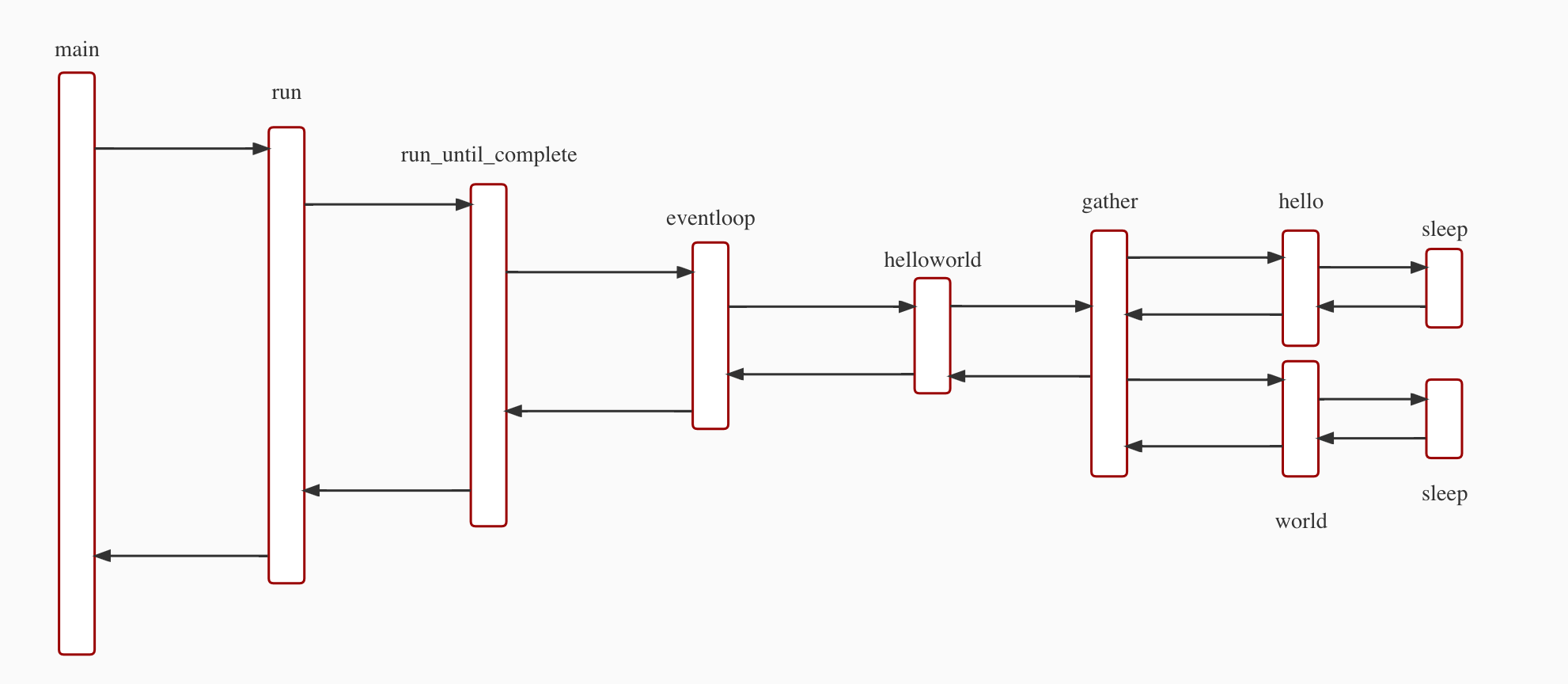
六、小结
● 无法总结。。。。有问题私信、留言
● 本文中的代码,参考了python 3.7.7中asyncio的源代码,裁剪而来
● 本文中代码:代码
至此,本文结束
在下才疏学浅,有撒汤漏水的,请各位不吝赐教...
更多文章,请关注我:wilson.chai
本文来自博客园,作者:wilson排球,转载请注明原文链接:https://www.cnblogs.com/MrVolleyball/p/15988557.html