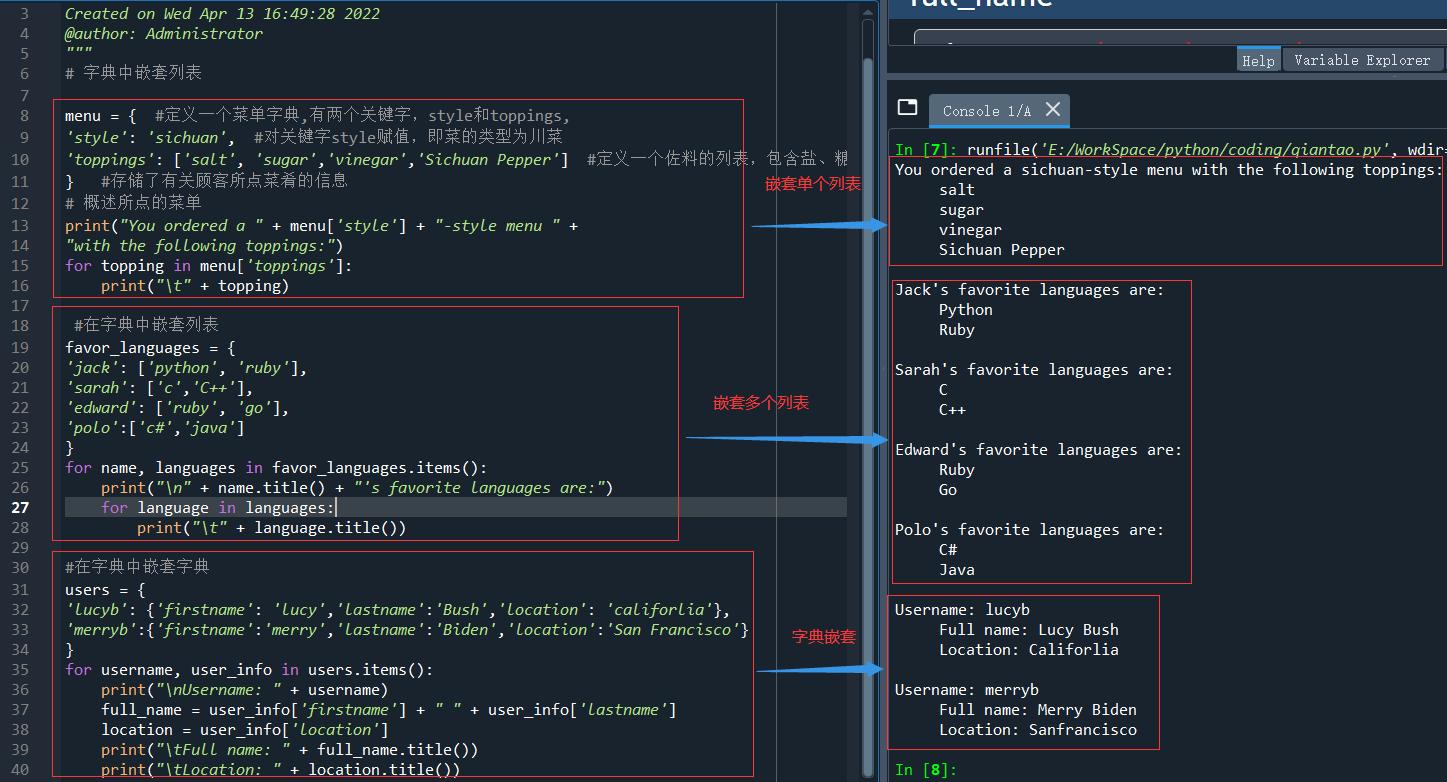
嵌套:将一系列字典存储在列表中,或将列表作为值存储在字典中,这称为嵌套。既可以在列表中嵌套字典,也可以在字典中嵌套列表,甚至在字典中嵌套字典。
一、列表中嵌套字典
1)一般创建方式:
student_A ={'name':'Allen','age':'14','grade':'8'} student_B ={'name':'Jack','age':'12','grade':'6'} student_C ={'name':'Lucy','age':'13','grade':'7'} student_D ={'name':'polo','age':'14','grade':'8'} #上述四行,创建了4个字典,每个字典代表一个学生students=[student_A,student_B,student_C,student_D]#将上述4个学生放名为students的列表中for student in students: #遍历students列表 print(student) #打印每个学生print("\n") 2)批量创建同类型的字典,比如游戏中很多同类型小兵
#创建更多的同类型的字典ghosts=[] #创建一个空ghosts列表for ghost_number in range(10): #创建10个ghost,注意range(10)是从0-9 new_ghost={'name':'rubbish','life':'10','speed':'1'} #同类型的名字rubbish,颜色为green,生命力为10,速度为1 ghosts.append(new_ghost) #append()是将创建的new_ghost放到列表ghosts最后 for ghost in ghosts: #遍历创建的ghosts列表 print(ghost) #打印ghosts中的每个元素,即10个同类型的ghost print("Total number of ghosts:"+str(len(ghosts))) #打印ghosts列表中元素的个数,len()求元素个数,str()转为字符串
3)同类型的字典,可通过循环,及切片进行增、删、改等操作。
for ghost in ghosts[0:3]: if ghost['color'] == 'green': ghost['color'] = 'yellow' ghost['speed'] = 2 ghost['life'] = 5for ghost in ghosts: print(ghost)
运行如果:

二、字典中嵌套列表
比如在实际生活中,描述菜单,如果使用列表,只能存储菜肴的配料;但如果使用字典,就不仅可在其中包含配料列表,还可包含其他有关描述。
如下示例,存储了菜单的两方面信息:菜肴类型和配料列表。
其中的配料列表是一个与键 'toppings' (佐料)相关联的值。
要访问该列表,使用字典名和键 'toppings' ,就像访问字典中的其他值一样,这将返回一个配料列表,而不是单个值
1)嵌套一个列表
# 存储所点菜单的信息menu = { # 定义一个菜单字典'style': 'sichuan', #定义菜单的类型,四川菜'toppings': ['salt', 'sugar','vinegar','Sichuan Pepper'] # 定义一个佐料的列表,包含盐、糖、醋、花椒} #存储了有关顾客所点菜肴的信息# 概述所点的菜单print("You ordered a " + menu['style'] + "-style menu " +"with the following toppings:") for topping in menu['toppings']: print("\t" + topping)
2)嵌套多个列表
favor_languages = {'jack': ['python', 'ruby'],'sarah': ['c','C++'],'edward': ['ruby', 'go'],'polo':['c#','java']}for name, languages in favor_languages.items(): print("\n" + name.title() + "'s favorite languages are:") for language in languages: print("\t" + language.title())
三、在字典中存储字典
网站有多个用户,每个都有独特ID(或用户名),可以在字典中将用户名作为键,再将每位用户的信息存储在一个字典中,并将该字典作为与用户名相关联的值。对于每位用户,都存储了其三项信息:名、姓和居住地;为访问这些信息,遍历所有的用户名,并访问与每个用户名相关联的信息字典
#在字典中嵌套字典users = { #创建一个users的字典,字典中有两个关键字(id)lucyb和merryb,'lucyb': {'firstname': 'lucy','lastname':'Bush','location': 'califorlia'},'merryb':{'firstname':'merry','lastname':'Biden','location':'San Francisco'}} # lucyb和merryb又分别为两字典,各自有三个关键字,firstname,lastname和locationfor username, user_info in users.items(): #遍历字典uers的每一项 print("\nUsername: " + username) full_name = user_info['firstname'] + " " + user_info['lastname'] location = user_info['location'] print("\tFull name: " + full_name.title()) print("\tLocation: " + location.title())
运行结果: