本文探讨的是在tomcat服务端接口编程中, 异步servlet场景下( 参考我另外一个文章),用rxjava来改造接口为全流程异步方式
好处不用说
但是缺点也没法逃避
解决这些缺点,在其他语言上有
实现上有的是语法层面,有的是语法糖(编译成状态机),抛开机制不同,他们都是为了解决了一个关键问题:
那么java咋办,作为同时jvm语言的kotlin的Coroutine(协程)可以帮到我们!
回到刚开头说的探讨场景,可能有人会觉得奇怪,如果用kotlin的话,有kotlin方式的服务端异步编程框架啊,比如ktor。或者spring webflux + kotlin suspend等 没错,建议都采用这种方式最好! 那在源头上就是非上面的,我们又如何利用kotlin的协程,是今天主要讨论的话题!
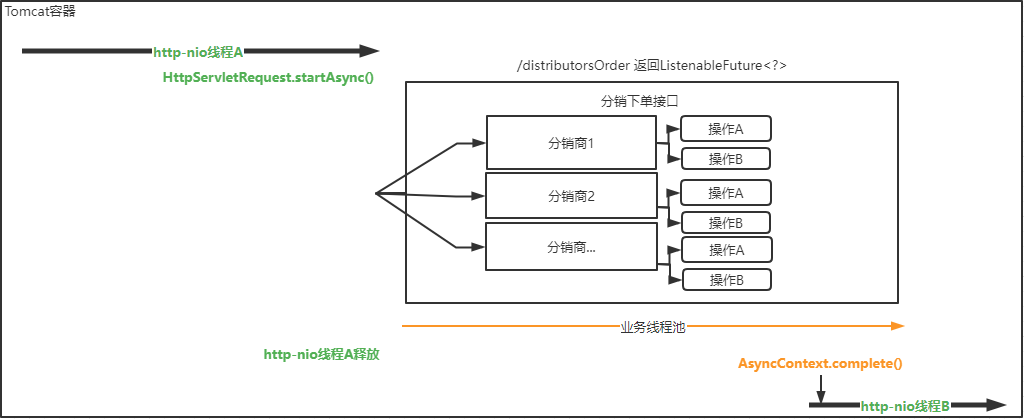
这里举例下分销订单接口, 不同的分销商都得call一次,call完后还要根据结果来做别的操作(A和B)。 假设有5个分销商 因为每个分销商之间没有依赖,所以优化方式自然想到用rxjava来改造!
要想在tomcat容器里实现全流程异步, 那肯定是用异步servlet的方式,如上图所示,tomcat的nio线程调用业务接口返回ListenableFuture, 会调用addListener设定一个callback,在callback里面进行异步上下文的提交
//异步servlet标准式操作final AsyncContext asyncContext = request.startAsync();final ListenableFuture<?> responseFuture = distributorsOrder();//业务方法responseFuture.addListener(() -> { try { // 略 } catch (Throwable ex) { _logger.error("Execute async context error!", t); } finally { asyncContext.complete(); } }, executorService);用rxjava的实现方式(示意伪代码)
private Single<Optional<List<String>>> createByAsync(Detail orderItem) { List<Single<Optional<List<String>>>> singleOptList = new ArrayList<>(); for (List<Distributor> distributor : distributorList) { Single<Optional<List<String>>> orderId = distributor .createOrderAsync(orderItem); singleOptList.add(orderId); } return Single.zip(singleOptList, objects -> { //回调处理略 return Optional.of(result); });} Single<Optional<List<String>>> createDistributorOrderSingle = createByAsync(orderItem);createDistributorOrderSingle.flatMap( (Function<Optional<List<String>>, SingleSource<List<ResultEntity>>>) objects -> { Single<Optional<List<ActionAResult>>> actionASingle = getActionABySoaAsync(objects); Single<Optional<List<ActionBResult>>> actionASingle = getActionBBySoaAsync(objects); return Single.zip(actionASingle, actionASingle, (actionATypes, actionBTypes) -> { // 回调处理略 return resultEntity; });});可能你第一次写完,尽管看起来很复杂,但是一看95线明显降低,是不是觉得还有点成就感呢, 后面业务变得复杂,继续叠加callback, 排查报错,一堆函数式链路,是不是觉得很难受。 好吧,这个项目重构代价太大了,那么后面你在写一个新业务的时候,你会还想要这么写吗? 有没有别的刚好的方式呢?
一般我们都微服务化,基本上调用都是通过微服务框架方式调用,微服务框架层一般会提供代理类来封装。 那么我们就可以通过包装代理类来实现kotlin的协程调用方式(灵感来自retrofit)
在设计这个功能的时候,我首先会想,暴露出来的使用方式怎么样是友好的,包括写单元测试。 那就是面向接口封装
interface SoaClientInterface { suspend fun soaMethod1(request: GetMethod1RequestType): GetMethod1ResponseType }@RunWith(SpringRunner::class)@SpringBootTest(webEnvironment = SpringBootTest.WebEnvironment.NONE)class SoaClientTest { @SoaClass private lateinit var soaClients: SoaClientInterface @Test fun test() = runBlocking { val resaponse = soaClients.soaMethod1(request) }}如上,我要调用的微服务方法 soaMethod1 (suspend方法) 我把他定义到一个interface里面,然后我在使用的时候只需要打上一个注解@SoaClass 在使用的时候就直接用就可以了。
这样一来, soaMethod1 原本是返回ListenableFuture 被我包装成一个代理类,代理类返回的是Coroutine 借助suspend语法糖,内部会帮我们自动切换上下文。
是我自定义的spring BeanPostProcessor 处理标识, 在spring容器的流程中,会发掘打了这个注解的field并注入我自定义的接口实现类!
我的接口实现类的目的是为了包装ListenableFuture为suspend的Coroutine方式调用
这里用jdk的proxy功能创建代理类,当调用代理类的任何方法,都会走到这里
public <T> T create(final Class<T> service, ISoaFactory soaFactory) throws Exception { validateServiceInterface(service, soaFactory); return (T) Proxy.newProxyInstance(service.getClassLoader(), new Class<?>[]{service}, new InvocationHandler() { private final Object[] emptyArgs = new Object[0]; @Override public @Nullable Object invoke(Object proxy, Method method, @Nullable Object[] args) throws Throwable { // If the method is a method from Object then defer to normal invocation. if (method.getDeclaringClass() == Object.class) { return method.invoke(this, args); } args = args != null ? args : emptyArgs; return method.isDefault() ? invokeDefaultMethod(method, service, proxy, args) : loadServiceMethod(method, soaFactory).invoke(args); } }); }代理接口定义的每个方法都会解析成一个SoaServiceMethod<?>,缓存起来下次调用
SoaServiceMethod<?> loadServiceMethod(Method method, ISoaFactory soaFactory) throws Exception { SoaServiceMethod<?> result = serviceMethodCache.get(method); if (result != null) { return result; } synchronized (serviceMethodCache) { result = serviceMethodCache.get(method); if (result == null) { result = SoaServiceMethod.parseAnnotations(method, soaFactory); serviceMethodCache.put(method, result); } } return result; }每个方法需要去解析且拿到以下信息
SoaRequestFactory build() { int parameterCount = parameterAnnotationsArray.length; if (parameterCount > 2 || parameterCount < 1) { throw new IllegalArgumentException("Method request parameterCount invalid" + "\n for method " + method.getDeclaringClass().getSimpleName() + "." + method.getName()); } try { if (TypeUtils.getRawType(parameterTypes[parameterTypes.length - 1]) == Continuation.class) { isKotlinSuspendFunction = true; } } catch (NoClassDefFoundError ignored) { // Ignored } if (!isKotlinSuspendFunction && parameterCount > 1) { throw new IllegalArgumentException("Method request parameterCount invalid" + "\n for method " + method.getDeclaringClass().getSimpleName() + "." + method.getName()); } Type returnType = method.getGenericReturnType(); if (hasUnresolvableType(returnType)) { throw new IllegalArgumentException(String.format("Method return type must not include a type variable or wildcard: %s", returnType) + "\n for method " + method.getDeclaringClass().getSimpleName() + "." + method.getName()); } if (returnType == void.class) { throw new IllegalArgumentException("Service methods cannot return void." + "\n for method " + method.getDeclaringClass().getSimpleName() + "." + method.getName()); } // 返回类型 Type adapterType; if (isKotlinSuspendFunction) { adapterType = TypeUtils.getParameterLowerBound( 0, (ParameterizedType) parameterTypes[parameterTypes.length - 1]); if (TypeUtils.getRawType(adapterType) == AsyncResult.class && adapterType instanceof ParameterizedType) { adapterType = TypeUtils.getParameterUpperBound(0, (ParameterizedType) adapterType); continuationWantsResponse = true; } continuationIsUnit = isUnit(adapterType); } else { adapterType = returnType; } this.requestType = method.getParameterTypes()[0]; this.responseType = (Class<?>) adapterType; this.methodName = method.getName(); return new SoaRequestFactory(this); }如果是kotlin的suspend方式 那么需要在java里面直接调用kotlin写的扩展方法
@OverrideObject invoke(Object[] args) { Continuation<ResponseT> continuation = (Continuation<ResponseT>) args[args.length - 1]; try { return SoaExtendKotlinKt.await(soaClient, args[0], continuation); } catch (Exception e) { return SoaExtendKotlinKt.suspendAndThrow(e, continuation); }}这里是最核心的实现方式 ListenableFuture -> suspend func
suspend fun <T : Any, K : Any> SoaClient<T, K>.await(request: T): K? { return suspendCancellableCoroutine { continuation -> continuation.invokeOnCancellation { this.cancel() } Futures.addCallback( this.handleAsync(request), CatAsync.wrap(object : FutureCallback<K> { override fun onSuccess(result: K?) { continuation.resume(result) } override fun onFailure(t: Throwable) { continuation.resumeWithException(t) } }), ThreadPool.INSTANCE ) }}只要思路定下来,技术细节实现就很简单了。 那么这么一包装,用的时候的好处怎么体现出来呢?我们把上面用rxjava的实现的伪代码换成kotlin方式的伪代码
interface SoaClientInterface { suspend fun createOrderAsync(request: CreateOrderRequestType): CreateOrderResponseType}@SoaClassprivate lateinit var soaClients: SoaClientInterfacesuspend func createDistributorsOrder(request:createRequestType)=coroutineScope{ val channel = Channel<List<User>>() for (distributor in distributorList) { launch { // 并发调用 val users = soaClients.createOrderAsync(CreateOrderRequestType().also{ it.orderItem = request.orderItem it.distributorId = distributor.id }) .also { log(repo, it) } .bodyList() channel.send(users) } } repeat(distributorList.size) { val rt = channel.receive() //处理其他 suspend } }采用了协程Coroutine的方式解决了异步回调,如果有报错也非常清楚(归功于kotlin的Coroutine的功能强大) 其中最难的是依赖对方提供的方法返回的是ListenableFuture 如何包装成 suspend func 来达到整体的suspend一路到底的全链路异步方式~!